

Site preparation is an important concept before many kinds of projects, and an asphalt paving project is no exception. Which key elements of asphalt paving site preparation should you be knowledgeable about ahead of any such project?
At Asphalt Masters, we’re proud to offer the best asphalt paving services you’ll find around Ogden, UT, and nearby areas. Here is a step-by-step guide to asphalt paving site preparation for both residential and commercial projects, with simple steps to follow either on your own or with the help of our asphalt paving professionals wherever needed.
Step 1: Measuring and Evaluating Site
The first basic step in asphalt paving is to survey the site, take careful measurements, and assess any potential challenges that may arise. This helps determine the amount of materials needed, plan for proper drainage, and identify any underlying issues that need to be addressed before beginning the project.
During this step, it is important to consider factors such as the type of soil, any slopes or changes in elevation, and the amount of traffic that the paved area will be subject to. This information will help determine the appropriate thickness of asphalt needed for a durable and long-lasting paved surface.
Step 2: Preparing the Base
The base layer is crucial for a successful asphalt paving project. It provides a stable foundation for the asphalt and helps with proper drainage. To prepare the base, the existing soil must be excavated to the desired depth and then compacted thoroughly using heavy machinery. This creates a solid base that can withstand heavy loads and prevent cracking or sinking of the asphalt.
Step 3: Removing Vegetation and Other Debris
Once the base layer has been prepared for paving, it is important to remove any vegetation or debris that may be present on the surface. This includes grass, weeds, and rocks. Vegetation can cause issues with the stability of the asphalt, and debris can create an uneven surface, leading to problems with the final pavement.
To remove vegetation, a herbicide may be used to kill off any remaining roots after excavation. Any remaining debris should be removed manually or using heavy machinery such as a bulldozer or excavator.
Step 4: Remove Existing Pavement
If any existing pavement is present, it must be removed before the new asphalt can be laid. This may involve using heavy machinery such as a jackhammer to break up the existing pavement and then removing it with a dump truck.
Once the old pavement is fully removed, the area should be checked for any remaining debris or uneven surfaces. Any issues should be addressed before proceeding to the next step.
Step 5: Grading and Compacting
After preparing the base, grading and compacting are essential steps in ensuring a smooth and durable asphalt surface. Grading involves leveling out the base by adding or removing materials as needed to create an even surface. This can be done using machinery such as a motor grader.
During this step, the slope of the base should also be checked to ensure proper drainage. A slight slope away from buildings and structures is necessary to prevent water from pooling on the surface.
Adding a Binder
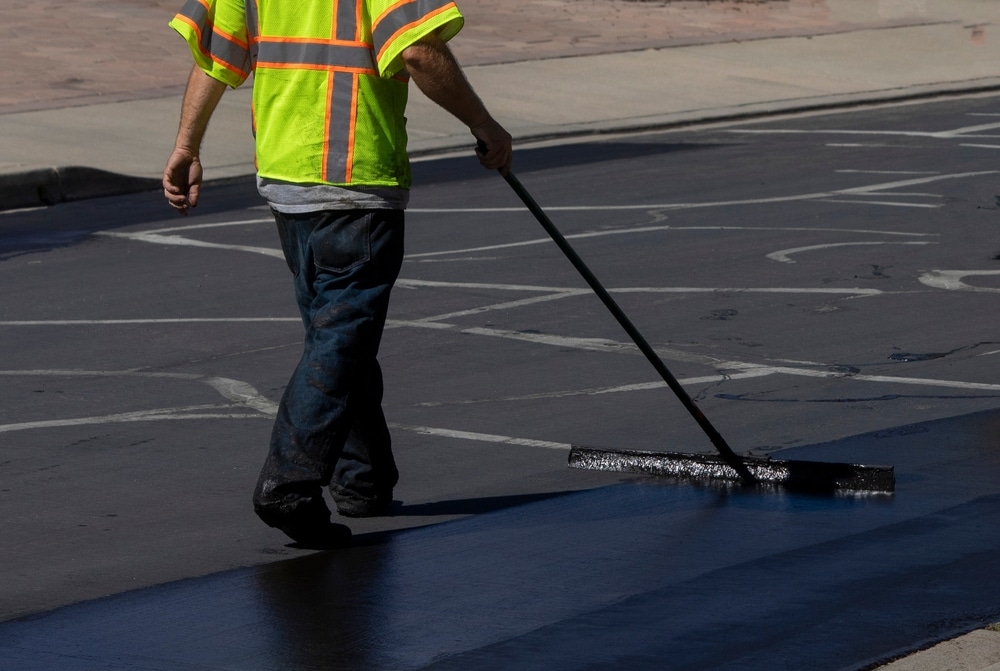
When we talk about an asphalt binder, we’re referring to the material that holds the asphalt mix together. Without a binder, the aggregate particles would not stick to each other, and the surface would crumble.
The most common type of binder used in asphalt paving is bitumen, a byproduct of petroleum refining. It is a sticky and viscous material that allows for proper adhesion between the aggregate particles. Bitumen also helps to waterproof and protect the underlying layers of the pavement.
Finalizing Site Checks
Once all of these factors have been considered and addressed, the final step in preparing for asphalt paving is to perform site checks. This involves a thorough inspection of the area where the pavement will be laid to ensure that it is ready for paving.
During these site checks, any potential issues such as soft spots, drainage problems, or uneven surfaces can be identified and addressed before paving begins. This helps to prevent future problems and ensures that the asphalt pavement will last longer.
And once these final checks are complete, the asphalt paving site preparation is complete! The surface can now be safely paved for any need.
And at Asphalt Masters, we’re here to help with all your asphalt paving needs around Ogden, UT, and nearby areas, including asphalt paving site preparation. Contact us today to learn more or get started with any asphalt project!